Thank you for reducing paper waste by enjoying this digital program
Please dim the brightness of your phone and set it to Silent
WiFi: WinspearGuest • Password: ConcertHall
Click on images and buttons for more information
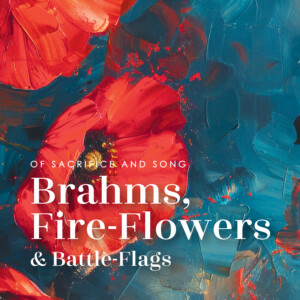
Brahms, Fire-Flowers & Battle-Flags
Saturday, November 1, 2025 at 7:30pm
Winspear Centre
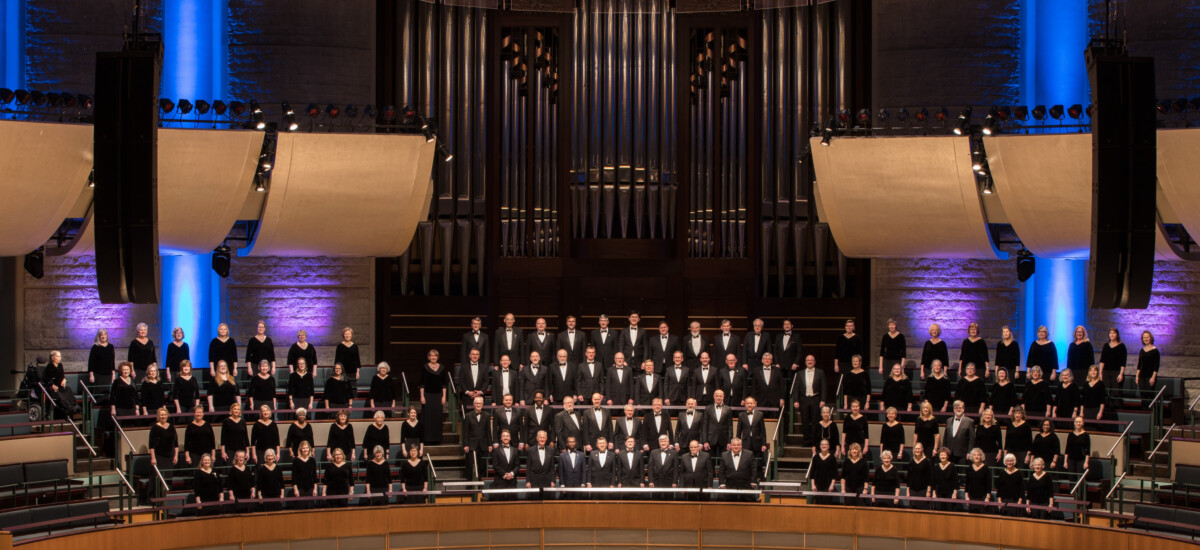
Chorus Inspira
Timothy Shantz, Conductor
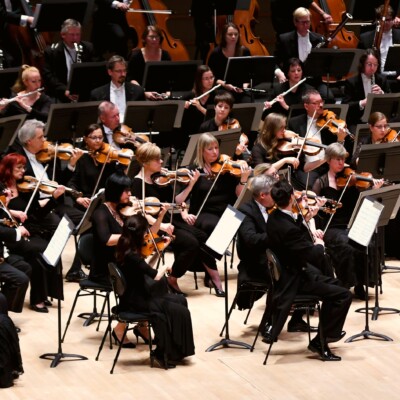
Edmonton Symphony Orchestra
University of Alberta Concert Choir
University of Alberta Madrigal Singers
Laura Brandt, Soprano
Jonathon Adams, Baritone
PROGRAM
|
Battle-Flags |
Zachary Wadsworth | |||
| (b. 1983) | ||||
| Ein deutsches Requiem | Johannes Brahms | |||
| (1833-1897) | ||||
| I | Selig sind, die da Leid tragen | |||
| II | Denn alles Fleisch es ist wie Gras | |||
| III | Herr, lehre doch mich | |||
| Jonathon Adams, baritone | ||||
| IV | Wie lieblich sind deine Wohnungen | |||
| V | Ihr habt nun Traurigkeit | |||
| Laura Brandt, soprano | ||||
| VI | Denn wir haben hie keine bleibende Statt | |||
| Jonathon Adams, baritone | ||||
| VII | Selig sind die Toten | |||
| Fire-Flowers (world-premiere orchestration) | Zachary Wadsworth | |||
| Laura Brandt, soprano | ||||
| Jonathon Adams, baritone | ||||
TEXTS & TRANSLATION
Battle-Flags
Text by Walt Whitman (1819-1892) from When Lilacs Last in the Dooryard Bloom’d (1865)
To the tally of my soul,
Loud and strong kept up the gray-brown bird,
With pure deliberate notes spreading filling the night.
Loud in the pines and cedars dim,
Clear in the freshness moist and the swamp-perfume,
And I with my comrades there in the night.
I saw askant the armies,
I saw as in noiseless dreams hundreds of battle-flags,
Borne through the smoke of the battles and pierc’d with missiles I saw them,
And carried hither and yon through the smoke, and torn and bloody,
And at last but a few shreds left on the staffs, (and all in silence,)
And the staffs all splinter’d and broken.
I saw battle-corpses, myriads of them,
And the white skeletons of young men, I saw them,
I saw the debris and debris of all the slain soldiers of the war,
But I saw they were not as was thought,
They themselves were fully at rest, they suffer’d not,
The living remained and suffer’d, the mother suffer’d,
And the wife and the child and the musing comrade suffer’d,
And the armies that remain’d suffer’d.
Ein deutsches Requiem – Text from Bible
| German | English | |
| I | ||
| Matthew 5:4 | Selig sind, die da Leid tragen, denn sie sollen getröstet werden. | Blessed are they that suffer; for they shall be comforted. |
| Psalm 126:5,6 | Die mit Tränen säen, werden mit Freuden ernten. Sie gehen hin und weinen und tragen edlen Samen, und kommen mit Freuden und bringen ihre Garben. |
They that sow in tears shall reap in joy. They go forth and weep, bearing precious seed, and shall come again with rejoicing, bringing their sheaves with them. |
| II | ||
| 1 Peter 1:24 | Denn alles Fleisch es ist wie Gras und alle Herrlichkeit des Menschen wie des Grases Blumen. Das Gras ist verdorret und die Blume abgefallen. | For all flesh is as grass, and all the glory of man as the flower of grass. The grass has withered, and the flower thereof has fallen away. |
| James 5:7 | So seid nun geduldig, lieben Brüder, bis auf die Zukunft des Herrn. Siehe, ein Ackermann wartet auf die köstliche Frucht der Erde und ist geduldig darüber, bis er empfahe den Morgenregen und Abendregen. | Be patient therefore, dear brethren, unto the coming of the Lord. Behold, a farmer waits for the precious fruit of the earth, and is patient about it, until he receives the rain of the morning and the evening. |
| 1 Peter 1:25 | Aber des Herrn Wort bleibet in Ewigkeit. | But the word of the Lord endures forever. |
| Isaiah 35:10 | Die Erlöseten des Herrn werden wieder kommen, und gen Zion kommen mit Jauchzen; ewige Freude wird über ihrem Haupte sein; Freude und Wonne werden sie ergreifen und Schmerz und Seufzen wird weg müssen. | And the ransomed of the Lord shall return, and come to Zion exulting; everlasting joy will be upon their heads; they shall obtain joy and gladness, and sorrow and sighing shall flee away. |
| III | ||
| Psalm 39:4-7 | Herr, lehre doch mich, daß ein Ende mit mir haben muß, und mein Leben ein Ziel hat, und ich davon muß. Siehe, meine Tage sind einer Hand breit vor dir, und mein Leben ist wie nichts vor dir. Ach, wie gar nichts sind alle Menschen, die doch so sicher leben. Sie gehen daher wie ein Schemen, und machen ihnen viel vergebliche Unruhe; sie sammeln und wissen nicht wer es kriegen wird. Nun Herr, wes soll ich mich trösten? Ich hoffe auf dich. |
Lord, teach me that there will be an end to me, and that my life has limits, and that I have to pass on. Behold, before thee my days are a handbreadth; and my life is as nothing before thee. Alas, all men are as nothing at all, though they live securely. They wander around like shadows and are disquieted in vain; they heap up riches, and don’t know who shall get them. And now, Lord, how can I be comforted? My hope is in thee. |
| Wisdom of Solomon 3:1 | Der Gerechten Seelen sind in Gottes Hand und keine Qual rühret sie an. | But the souls of the righteous are in the hand of God, and there shall no torment touch them. |
| IV | ||
| Psalm 84:1,2,4 | Wie lieblich sind deine Wohnungen, Herr Zebaoth! Meine Seele verlanget und sehnet sich nach den Vorhöfen des Herrn; mein Leib und Seele freuen sich in dem lebendigen Gott. Wohl denen, die in deinem Hause wohnen, die loben dich immerdar. | How lovely are thy dwelling places, O Lord of hosts! My soul desires and longs for the courts of the Lord: my body and my soul rejoice in the living God. Blessed are they that dwell in thy house: they will praise thee forever. |
| V | ||
| John 16:22 | Ihr habt nun Traurigkeit; aber ich will euch wieder sehen und euer Herz soll sich freuen und eure Freude soll neimand von euch nehmen. | You have sorrow now; but I will see you again, and your heart shall rejoice, and no man shall take your joy from you. |
| Ecclesiasticus 51:27 | Sehet mich an: Ich habe eine kleine Zeit Mühe und Arbeit gehabt und habe großen Trost funden. | Look at me: for a little while I had labour and toil, yet I have found great comfort. |
| Isaiah 66:13 | Ich will euch trösten, wie Einen seine Mutter tröstet. | I want to comfort you, like one whom his mother comforts. |
| VI | ||
| Hebrews 13:14 | Denn wir haben hie keine bleibende Statt, sondern die zukünftige suchen wir. | For here we have no lasting place, but we seek the one to come. |
| 1 Corinthians 15:51,52,54,55 | Siehe, ich sage euch ein Geheimnis: Wir werden nicht alle entschlafen, wir werden aber alle verwandelt werden; und dasselbige plötzlich, in einem Augenblick, zu der Zeit der letzten Posaune. Denn es wird die Posaune schallen, und die Toten werden auferstehen unverweslich und wir werden verwandelt werden. Dann wird erfüllet werden das Wort, das geschrieben steht: Der Tod ist verschlungen in den Sieg. Tod, wo ist dein Stachel? Hölle, wo ist dein Sieg? | Behold, I shew you a mystery; We shall not all sleep, but we shall all be changed; and that in a moment, in the twinkling of an eye, at the time of the last trumpet (trombone): for the trumpet shall sound, and the dead shall be raised incorruptible, and we shall be changed. Then shall be brought to pass the word that is written: Death is swallowed in victory. O death, where is thy sting? O hell, where is thy victory? |
| Revelation 4:11 | Herr, du bist würdig zu nehmen Preis und Ehre und Kraft, denn du hast alle Dinge geschaffen, und durch deinen Willen haben sie das Wesen und sind geschaffen. | Thou art worthy, O Lord, to receive glory and honour and power: for thou hast created all things, and through thy will they have their being and are created. |
| VII | ||
| Revelation 14:13 | Selig sind die Toten, die in dem Herrn sterben, von nun an. Ja, der Geist spricht, daß sie ruhen von ihrer Arbeit; denn ihre Werke folgen ihnen nach. | Blessed are the dead which die in the Lord from henceforth: Yea, saith the Spirit, that they may rest from their labours; for their works do follow them. |
Fire-Flowers
Text by Emily Pauline Johnson (Tekahionwake) (1861-1913) from Canadian Born (1903) republished in Flint and Feather (1912 and 1917)
And only where the forest fires have sped,
Scorching relentlessly the cool north lands,
A sweet wild flower lifts its purple head,
And, like some gentle spirit sorrow-fed,
It hides the scars with almost human hands.
And only to the heart that knows of grief,
Of desolating fire, of human pain,
There comes some purifying sweet belief,
Some fellow-feeling beautiful, if brief.
And life revives, and blossoms once again.
PROGRAM NOTES
Battle-Flags and Fire-Flowers notes by Zachary Wadsworth
Battle-Flags
Commissioned by the Choral Arts Society of Washington, Scott Tucker, Artistic Director, in memory of Norman Scribner. Original version (for chorus and string orchestra) completed in August, 2015.
As a Union army nurse during the Civil War, Walt Whitman witnessed horrible death, as well as the profound sorrow felt by families and comrades of the lost. He explored the resonance of this sorrow in his extended poem Lilacs Last in the Dooryard Bloom’d, in which the dead have found rest, but those still living carry the burden of grief. How do we, the living, continue to express this grief? One way is by singing the Requiem; by joining together in prayer and song, we console ourselves that beauty and life continue, even in the face of great loss. Another is by composing our own, new expressions of grief.
Battle-Flags is an expression of sorrow, written as a prelude to Brahms’ German Requiem. It opens with rustling and bright music in the orchestra and chorus, painting placid scenes of nature at night. Without warning, Whitman’s nightmare scenes of the dead rush in with explosive musical violence. Then a contemplative a cappella section leads into strangely familiar, consoling music in the orchestra, evocative of Brahms. The choir’s final statements about suffering trail off unreconciled.
Fire-Flowers
This orchestral version was commissioned by, and is dedicated to, Chorus Inspira, its artistic director Timothy Shantz, and the Edmonton Symphony Orchestra.
Originally commissioned by Luminous Voices and dedicated with admiration to Luminous Voices and Timothy Shantz, who, with soprano Laura Brandt, baritone Jonathan Adams, and pianists Cheryl Emery & Leanne Regehr, performed its premiere on November 14, 2021.
Completed in October, 2021.
We live in a time of conflagrations, both literal and metaphorical. Forests burn, ice melts, and a pandemic strips away every once-comforting ritual (a conversation, a handshake, a concert). Now, grief and mourning are constant; the Requiem starts over with every new, permanent loss. But what of hope?
When I first read E. Pauline Johnson’s poem, Fire-Flowers, I felt that unfamiliar feeling, that tingle of hope. In ten short lines, Johnson performs impossible alchemy. Yes, she says, the forest will burn. Then, new growth will follow. Yes, people will die. Then, others will grow closer together in their memory. After reading this poem, I felt hope that we can come back together in ways that honour the dead, celebrate the very idea of living, and help to make the world more just, more sustainable, and more human.
In my musical setting of this beautiful poem, the orchestra begins by kindling a horrible fire. This fire returns throughout the piece, but each time, it clears the way for rituals of grieving, of healing, and of growing again.
Notes by Timothy Shantz
Ein deutsches Requiem by Johannes Brahms was referred to as a ‘human’ Requiem by the composer. This heartfelt work endures as a musical treasure.
Long-time Luminous Voices collaborator, Zachary Wadsworth, composed Battle-Flags as a prologue to the German Requiem for the Choral Arts Society of Washington. The 2015 composition both connects with, and reflects on, Brahms’ Requiem. During the height of the Covid-19 pandemic I approached Zach about composing an epilogue as a kind of musical bookend. The resulting composition forms a symmetrical and contemporary reflection, fitting of Brahms’ own musical architecture. E. Pauline Johnson’s Fire-Flowers provides a creative spark for Zach, with its melancholic yet hopeful words on death and renewal. It is our hope that the words and music of these artists provide solace and comfort to the listener.
Thanks to Zachary Wadsworth who expertly weaves his humanity, intelligence, soul, life experiences and artistry into his music.


GUEST ARTISTS



ACKNOWLEDGEMENTS
Special thanks to:
Dr Fabio Morabito & Zachary Wadsworth, Preludes pre-concert presentation
Non-Profit Arts Organizations are not possible without support from the community
Please click the buttons below in appreciation of the many people making this event possible
UPCOMING EVENTS
Handel’s Messiah
Friday & Saturday, December 12 & 13, 2025, 7:30pm
Winspear Centre
Chorus Inspira
Jean-Marie Zeitouni, Conductor
Edmonton Symphony Orchestra
Carole-Anne Roussel, Soprano
Mireille Lebel, Mezzo-Soprano
Andrew Haji, Tenor
Phillip Addis, Baritone
Program – Handel Messiah
Edmonton Sings
Saturday, March 7, 2026, 7:30pm
Winspear Centre
Chorus Inspira
Andrew Bortz, Conductor
Edmonton Children’s Choir
Edmonton Youth Choir
Jeremy Spurgeon, piano & organ
Bach’s Magnificat & Vivaldi’s Gloria
Friday & Saturday, May 29 & 30, 2026, 7:30pm
All Saints’ Anglican Cathedral
Chorus Inspira
Andrew Bortz, Conductor
Program
G.F. Handel Zadok the Priest
J.S. Bach Magnificat
Antonio Vivaldi Gloria
For all Mankind
Saturday, May 2, 2026, 7:00pm
McDougall Church
Danielle Lisboa, Conductor
Concordia Symphony Orchestra
Chorus Inspira
Program – Johannes Brahms Ein deutsches Requiem. Op. 45
Sing with Chorus Inspira
Tuesday, August 18, 2026, 7:00pm
Louise McKinney Park