Thank you for reducing paper waste by enjoying this digital program
Please dim the brightness of your phone and set it to Silent
For Best Viewing, Rotate your Phone

Unlock Phone Orientation if necessary
Friday & Saturday, May 29 & 30, 2026
7:30pm
All Saints’ Anglican Cathedral
Chorus Inspira
Andrew Bortz, Conductor
Inspira Baroque Orchestra
Jolaine Kerley, Soprano Soloist
Dawn Bailey, Soprano Soloist
Tina Alexander-Luna, Alto Soloist
Ian Bannerman, Tenor Soloist
Roderick Bryce, Bass Soloist
PROGRAM
Zadok the Priest – George Frideric Handel (1685 – 1759)
Magnificat – Johann Sebastian Bach (1685 – 1750)
Intermission
Gloria – Antonio Vivaldi (1678 – 1741)
TEXTS & TRANSLATIONS
Handel’s Zadok the Priest
Zadok the Priest, and Nathan the Prophet anointed Solomon King.
And all the people rejoiced, and said:
God save the King! Long live the King!
May the King live for ever,
Amen, Alleluia.
Bach’s Magnificat
| 1. Chorus | |
| Magnificat anima mea Dominum. | My soul magnifies the Lord. |
| 2. Aria S II | |
| Et exultavit spiritus meus in Deo salutari meo. | And my spirit rejoices in God my Savior. |
| 3. Aria S I | |
| Quia respexit humilitatem ancillae suae. | For he has regarded the lowliness of his handmaiden. |
| Ecce enim ex hoc beatam me dicent | Behold, from henceforth, I will be called blessed |
| 4. Chorus | |
| omnes generationes. | by all generations. |
| 5. Aria B | |
| Quia fecit mihi magna, | For the Mighty One has done |
| qui potens est, et sanctum nomen eius. | great things for me, and holy is his name. |
| 6. Aria (Duet) A T | |
| Et misericordia a progenie in progenies, | His mercy is for those who fear him |
| timentibus eum. | from generation to generation. |
| 7. Chorus | |
| Fecit potentiam in brachio suo, | He has shown strength with his arm, |
| dispersit superbos mente cordis sui. | he has scattered the proud in the thoughts of their hearts. |
| 8. Aria T | |
| Deposuit potentes de sede et exaltavit humiles. | He has brought down the powerful from their thrones and lifted up the lowly. |
| 9. Aria A | |
| Esurientes implevit bonis, | He has filled the hungry with good things, |
| et divites dimisit inanes. | and sent the rich away empty. |
| 10. Trio SI, SII, A | |
| Suscepit Israel puerum suum | He has helped his servant Israel |
| recordatus misericordie suae. | in remembrance of his mercy. |
| 11. Chorus | |
| Sicut locutus est ad patres nostros, | According to the promise he made to our ancestors, |
| Abraham et semini eius in saecula. | to Abraham and to his descendants forever.. |
| 12. Chorus | |
| Gloria Patri et Filio et Spiritui Sancto, | Glory to the Father and to the Son and to the Holy Spirit, |
| sicut erat in principio | as it was in the beginning, |
| et nunc et in saecula saeculorum, | is now, and for ever and ever, |
| Amen. | Amen. |
Vivaldi’s Gloria
| Gloria in excelsis Deo. | Glory to God in the highest. |
| Et in terra pax hominibus bonae voluntatis. | And on earth peace to men of good will. |
| Laudamus te, benedicimus te, | We praise you, we bless you, |
| Adoramus te, glorificamus te. | We adore you, we glorify you. |
| Gratias agimus tibi | We give you thanks |
| propter magnam gloriam tuam. | for your great glory. |
| Domine Deus, Rex coelestis, | Lord God, King of Heaven, |
| Deus Pater omnipotens. | God the Father Almighty. |
| Domine Fili unigenite, Jesu Christe. | Lord, only-begotten Son, Jesus Christ. |
| Domine Deus, Agnus Dei, Filius Patris. | Lord God, Lamb of God, Son of the Father |
| Qui tollis peccata mundi, | You who take away the sins of the world, |
| miserere nobis. | have mercy on us. |
| Qui tollis peccata mundi, | You who take away the sins of the world, |
| suscipe deprecationem nostram. | receive our prayer. |
| Qui sedes ad dexteram Patris, | You who sit at the right hand of the Father, |
| miserere nobis. | have mercy on us. |
| Quoniam tu solus Sanctus, tu solus Dominus, | For you alone are holy, you alone are Lord, |
| Tu solus Altissimus, Jesu Christe, | You alone are the Most High, Jesus Christ, |
| Cum Sancto Spiritu | With the Holy Spirit |
| in gloria Dei Patris. Amen. | in the glory of God the Father. Amen. |
PROGRAM NOTES
Handel’s Zadok the Priest
Written for the coronation of King George II in 1727, Zadok the Priest is the best-known of Handel’s four Coronation Anthems. The text comes from the Old Testament account of the anointing of Solomon by the priest Zadok and the prophet Nathan, words that had already formed part of English coronation ceremonies for hundreds of years before Handel set them to music.
The opening is famous for the extraordinary sense of suspense Handel creates. Rising violin arpeggios grow above richly spaced repeated chords for lower strings and woodwind before the full choir and orchestra suddenly burst in with “Zadok the Priest.” It is one of those musical moments that never quite loses its impact, no matter how familiar it becomes.
Unlike many large choral works of the period which utilize dense counterpoint, Handel keeps much of the choral texture straightforward and declamatory, allowing the ceremonial text to come across clearly. Handel’s setting proved so successful that it has been performed at every British coronation since its premiere in 1727.
Bach’s Magnificat
Composed in 1723 during Bach’s first year in Leipzig, the Magnificat was an ambitious new work for Christmas celebrations at St. Thomas Church. Based on Mary’s song of praise from the Gospel of Luke, the piece moves quickly between grandeur, tenderness, drama, and joy.
Bach later revised the work into the version most commonly heard today. He transposed it into D major, reworked parts of the orchestration, and removed several Christmas-specific movements that had been included in the original performance.
The Magnificat is full of Bach’s characteristic attention to detail. The music closely follows the meaning of the text: powerful passages for chorus and brass depict strength and majesty, while lighter scoring and more delicate textures accompany moments of humility and reflection. Near the end of the work, Bach brings back the music from the opening chorus, at the words “as it was in the beginning.”
Vivaldi’s Gloria
Vivaldi composed the Gloria in Venice between 1713 and 1717 for the musicians of the Ospedale della Pietà, where he spent much of his career teaching and composing. The Gloria is made up of a series of short contrasting movements. Some are bright, exuberant, and rhythmically driven, especially the famous opening chorus, while others are much more intimate and reflective. Vivaldi moves quickly between these different moods, giving the work vitality and variety.
The final movement, Cum Sancto Spiritu, is based on music by another composer, Giovanni Maria Ruggieri. Borrowing music like this was common practice in the Baroque period, and Vivaldi reshaped the material into a thrilling conclusion.
After Vivaldi’s death, the Gloria disappeared for nearly two centuries before being rediscovered in the 1920s among a collection of forgotten manuscripts. Today, it remains one of the most beloved works in the Baroque choral repertoire.
CHORUS INSPIRA
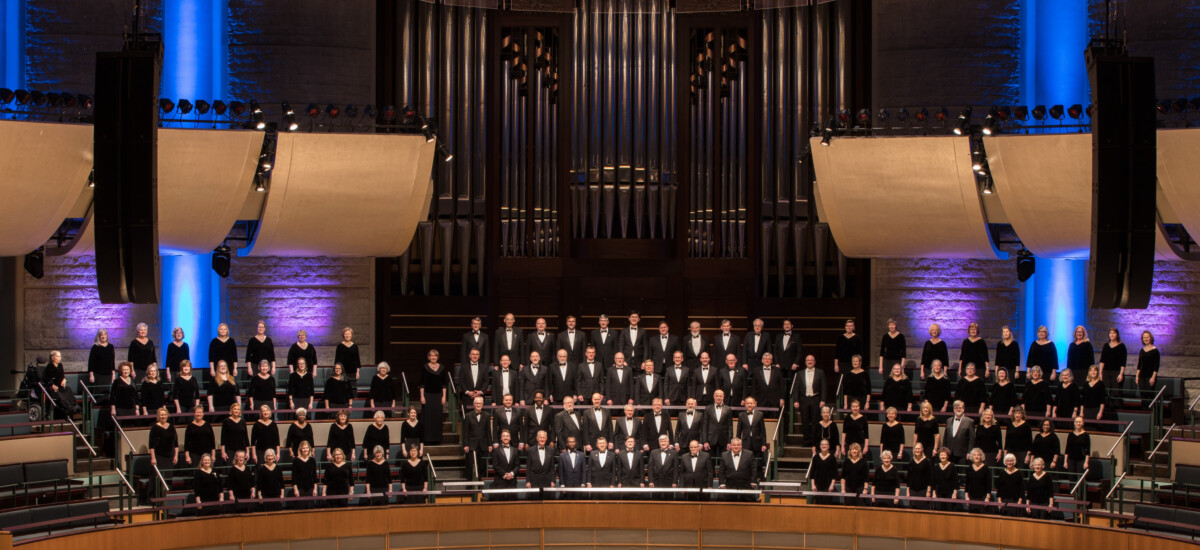
As the premier symphonic choir in Edmonton, Chorus Inspira believes in the vital importance of great choral music and its power to transform. Engaging new audiences not only in masterworks, but also in newly commissioned works that nurture hope, imagination and understanding for our world.
As an astute and resilient organization, our pursuit of excellence embraces a spirt of collaboration, discovery and growth to promote the advancement of choral music.
Artistic Director Dr. Timothy Shantz, creates a rigorous and rewarding ensemble experience that values each member of our dynamic and diverse group of 100+ singers who share a commitment to mastery of skills and performance.
Always exploring new ways to contribute in the modern context and adapting through strategic partnerships that open opportunities for greater artistic and community impact, we are building on a vibrant legacy of almost 75 years, including 57 years as Richard Eaton Singers.
Performances have included Edmonton premieres of many choral masterpieces such as Haydn’s Creation, Mendelssohn’s Elijah, Schubert’s Mass No 5 in A-Flat, Vaughan Williams’s The Sea Symphony, as well as many shorter works for accompanied and unaccompanied choir.
The choir has commissioned and produced premiere performances by Canadian composers, including Allan Bevan’s No Mortal Business and Last Light Above the World, as well as works by John Estacio, Stephanie Martin, Imant Raminsh and Mark Sirett. They have also participated in several ESO premieres of Canadian works, including Malcolm Forsyth’s A Ballad of Canada.
The choir has traveled extensively across Canada, to the Netherlands, Britain, and Germany. They also have participated in choir exchanges, including with the Calgary Philharmonic Choir and Vancouver Bach Choir.
The choir regularly performs with other Edmonton area choirs, most recently with Kappella Kyrie in a fundraiser concert in support of Ukrainian families who relocated to Edmonton during the war.
Often partnering with the Edmonton Symphony Orchestra, the choir has created many memorable choral events in our city, including the performance of Mahler’s Symphony of a Thousand to celebrate the opening of the Francis Winspear Centre for Music. In recent years the choir has joined forces with the Alberta Baroque Ensemble to perform a number of masterpieces from the Baroque and Classical periods.
The choir has a history of making wonderful music and looks forward to continuing the exploration of the richness of the human voice, supported by outstanding ensembles. As they continue to build connections, they hope that you will follow the journey and come along for the sonic experience.
CONDUCTOR

Andrew Bortz
Before moving to Edmonton, Andrew was the founder and artistic director of Aurora Chamber Choir and the assistant conductor for Vancouver’s Phoenix Chamber Choir and Chrysalis Vocal Ensemble. Andrew has sung with and conducted some of Canada’s finest professional choirs including musica intima, Vancouver Chamber Choir, Calgary’s Luminous Voices, and Edmonton’s Pro Coro Canada.
GUEST ARTISTS
Inspira Baroque Orchestra
| Violin 1 | Flute | |
| Susan Flook | Chenoa Anderson | |
| Viktoria Grynenko | Alex Valle | |
| Clare Pellerin | ||
| Yeganeh Sotudehnia | Oboe / Oboe d’amore | |
| Elisabeth Mellinger | ||
| Violin 2 | Matt Jaffray | |
| Vladimir Rufino | ||
| Christina Barry | Bassoon | |
| Ya-Lun Chen | Matt Howatt | |
| Grace Bae | ||
| Trumpet | ||
| Viola | Russ Whitehead | |
| Andrew Bacon | Kevin Yue | |
| Fabiola Amorim | Angelo Panahon | |
| Sarah Woodman | ||
| Timpani | ||
| Cello | Nicole Arendt | |
| Aiden Russell | ||
| Joanne Yu | Harpsichord | |
| Theron Pierce | Leanne Regehr | |
| Bass | Organ | |
| Peter Eratostene | Jeremy Spurgeon | |
| Toscha Turner | ||
| Orchestra Contractor | ||
| Violone | Jim Cockell | |
| Josephine Van Lier |
Jolaine Kerley, Soprano

Edmonton based soprano and conductor, Jolaine Kerley is active as a soloist, voice instructor, choral conductor, adjudicator, and clinician. She is currently Associate Professor of Music at Concordia University of Edmonton as well as artistic director of Ariose Choir. Jolaine holds graduate degrees from the University of Alberta and the Early Music Institute at Indiana University’s Jacobs School of Music.
Jolaine has been heard frequently as soprano soloist with choruses and orchestras throughout North America including the Edmonton Symphony Orchestra, the Alberta Baroque Orchestra, Richard Eaton Singers, Luminous Voices, and Pro Coro Canada. Recent solo engagements include The Music of Vaughan Williams with the Richard Eaton Singers and the Edmonton Symphony Orchestra, Singing Sirens of the Seicento with Early Music Alberta, Arietta with Early Music Alberta, Alan Bevan’s Nou Goth Sonne Under Wode at Carnegie Hall in New York City, Bach’s Johannes Passion with Calgary’s Professional vocal ensemble Luminous Voices, Bach’s BWV 36 with the Alberta Baroque Orchestra, Faure’s Requiem and Goodall’s Eternal Light with da Camera Singers and Vox Humana Vox Humilis, a solo recital with Early Music Alberta. Jolaine performs solo recitals throughout the Edmonton area and is frequently heard in concerts with Early Music Alberta and events with Concerts in Care, Health Arts Society of Alberta. Upcoming engagements include BWV 140 Wachet Auf with the Alberta Baroque Orchestra and BWV 198 Trauerode at the 2026 Early Music Alberta Festival.
Dawn Bailey, Soprano

Soprano Dawn Bailey holds a Bachelor of Music in vocal performance from the University of Toronto, a Master of Music in early music performance from McGill, and a Bachelor of Education from the University of Alberta. Dawn is a familiar face in Edmonton’s choral and early music communities, performing often with ProCoro Canada, Early Music Alberta, and the Alberta Baroque Ensemble. She has performed and recorded extensively with early music ensembles in Canada and Europe, including appearing as a soloist on Ensemble Caprice’s Juno award-winning album “Vivaldi and his Angels.” In addition to making music every day with her own three children, Dawn teaches grade two at the WISE Charter School for Waldorf Education.
Tina Alexander-Luna, Alto

Canadian mezzo-soprano Tina Alexander-Luna is a singer, teaching artist, and scholar whose work bridges performance, research, and community engagement. Originally from Ottawa, Ontario, she is recognized for her versatility across opera, concert, and choral repertoire, as well as for her collaborative and community-centred artistic practice.
Dr. Alexander-Luna holds a Doctor of Musical Arts in Voice Performance from University of Toronto, where her research examined the art songs of Canadian composer Violet Archer and Archer’s role in shaping Canada’s twentieth-century musical landscape as a woman composer.
Equally at home on the operatic and concert stage, she has performed with Canadian Chamber Choir, Theatre of Early Music, Canadian Opera Company, and Opera Chorus Canada. Her featured roles include the Third Lady in “Die Zauberflöte”, the Sorceress in “Dido and Aeneas”, and the Mother in “Amahl and the Night Visitors”. As an alto soloist, she has appeared in numerous chamber and concert works, including Mozart’s “Coronation Mass” and “Vespers”.
Committed to making classical music accessible beyond traditional concert spaces, Dr. Alexander-Luna previously served as a tenured faculty member at Northwestern Polytechnic and co-founded the Peace Region Music Series, a concert initiative dedicated to expanding access to professional live classical music in Northern Alberta. An active clinician, adjudicator, and performer, she is currently Assistant Professor of Voice at University of Regina.
Ian Bannerman, Tenor

Ian Bannerman is a conductor, vocalist, and teacher based in Edmonton, Alberta. Ian has had the privilege of performing with the Vancouver Chamber Choir, musica intima, Early Music Vancouver, Victoria Symphony, Okanogan Symphony Orchestra, Edmonton Opera, Luminous Voices, Pro Coro Canada, and Early Music Alberta. Holding a B. Mus. from The University of British Columbia, and a B. Ed. and M. Mus. from The University of Alberta, Ian currently teaches music at a public middle school, instructs vocal students at Concordia University of Edmonton, and conducts A Joyful Noise Monday Choir. Passionate about collaborative music making, Ian revels in opportunities to work with vocal ensembles as a conductor, soloist, or ensemble member. Recent highlights include conducting Edmonton Opera’s Singalong Messiah, singing a Palestrina 500 concert with the Schola Cantorum of St Joseph’s Basilica, and playing MacBeth in composer Andrew Creaghan’s MacBeth at the Edmonton Fringe Festival.
Roderick Bryce, Bass
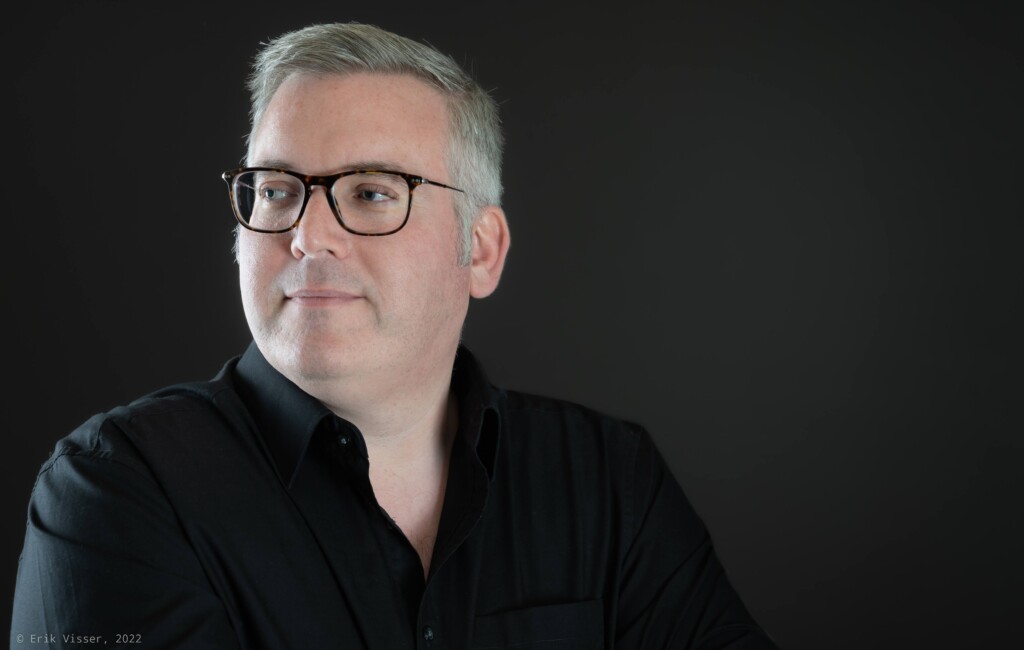
Hailing from Scotland, Roderick was in great demand there as a baritone, teacher, vocal coach and choral director. As a singer he broadcast often on BBC Radio 4 and regularly sang with Cappella Nova, including on their third disc of music by James Macmillan (Linn Records). He has recorded Bach’s Matthäus-Passion (Linn Records), and sung across Scotland, Northern Ireland and France with the Dunedin Consort. He has appeared with Masaaki Suzuki’s Bach Collegium Japan at the Edinburgh International Festival. Roderick was director of the Scottish Chamber Choir; founder and director of Sospiro Baroque and chorus master for the Erskine Stewart’s Melville Choir.
Living now in Edmonton, Roderick is Director of Music at St Joseph’s Cathedral-Basilica, and founder of its professional Schola Cantorum, and Artistic Director and CEO of A Joyful Noise Choir Association.
He appears frequently as a soloist in and around Alberta, especially with Early Music Alberta and has sung with the professional choirs Pro Coro Canada (Edmonton), Voicescapes (Calgary) and Luminous Voices (Calgary), appearing as soloist on the latter’s recording of Mendelssohn’s Te Deum. Recent solo work includes Mozart’s Requiem with Chorale Saint-Jean and Buxtehude Cantatas with Early Music Alberta.
Future engagements include projects with both Early Music Alberta (Bach and Charpentier) and Alberta Baroque Ensemble (Cantata 140: Wachef auf).
OUR TEAM
We have an awesome team!
Please see who does all the work by clicking on the button
DONATE
Special Thanks
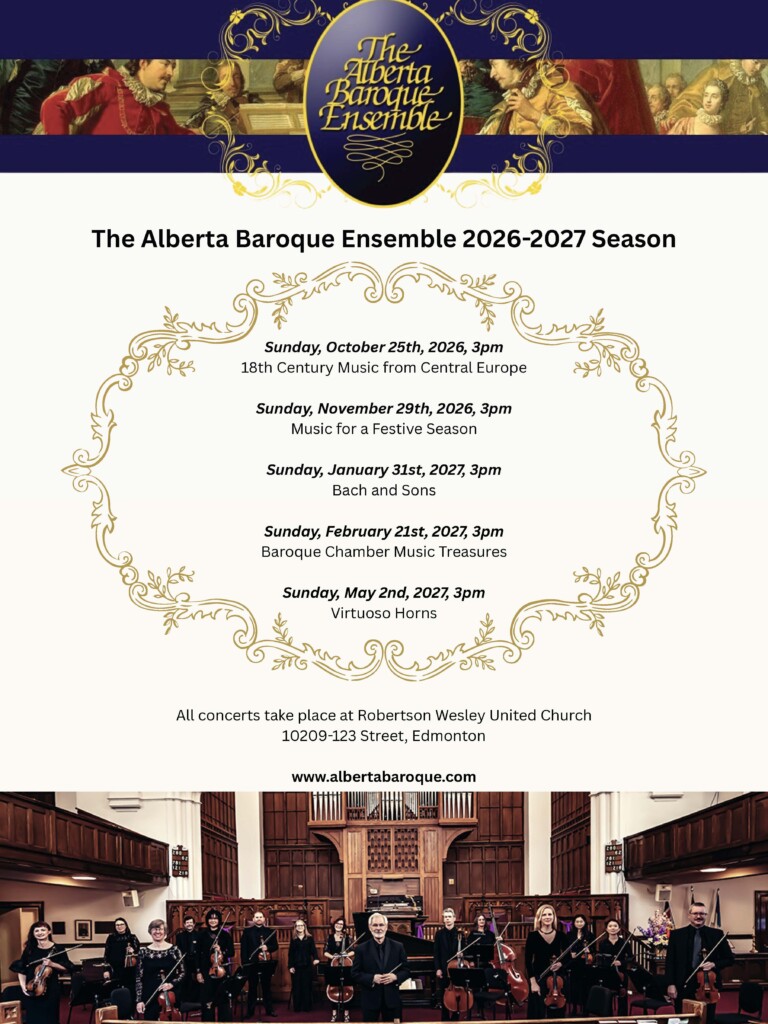
To Paul Schieman and Alberta Baroque Ensemble for the loan of the only oboes d’amore in town for use by the oboists in this concert!